
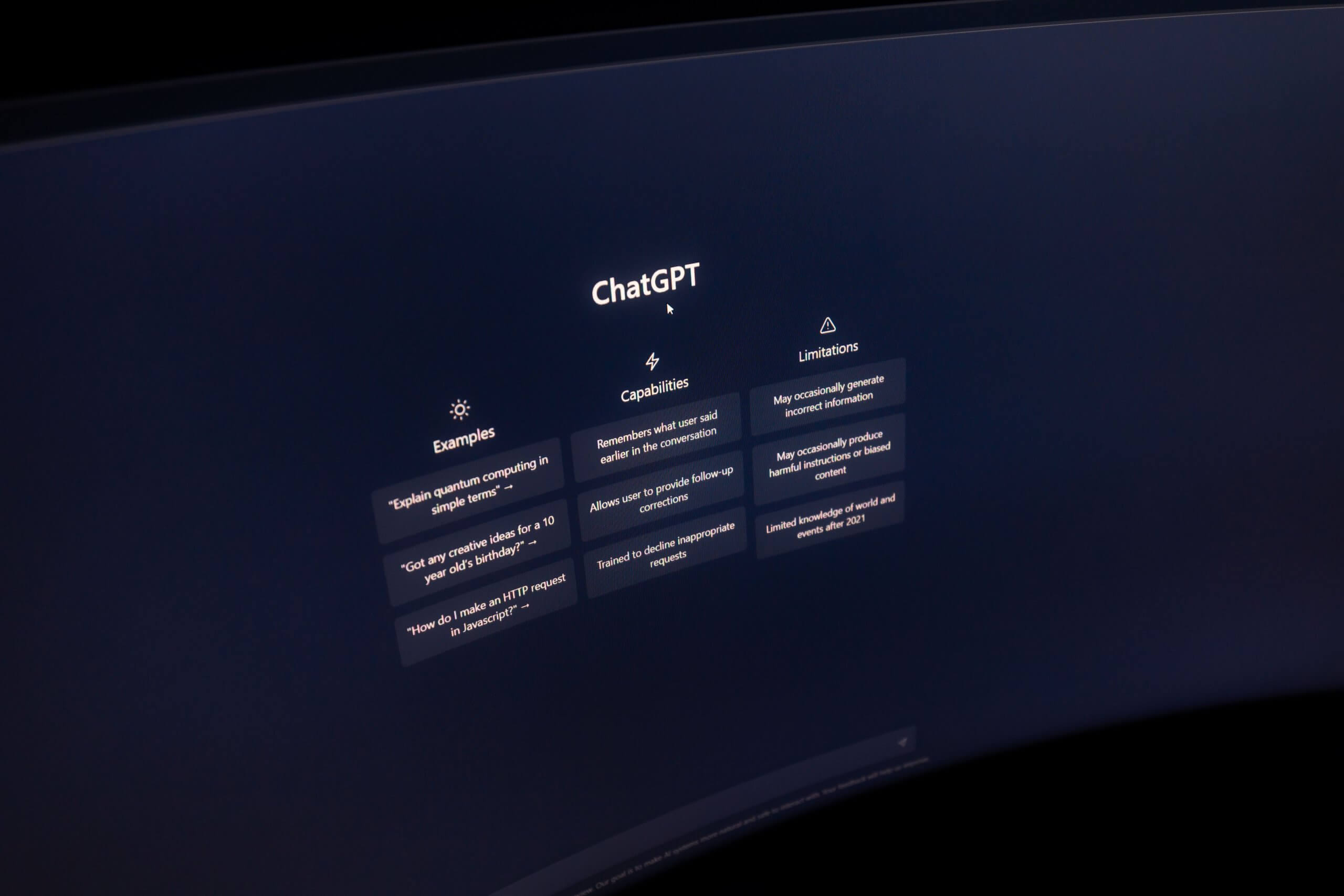
Your employees don’t need your permission to open ChatGPT. And that’s exactly where problems can begin.
A confidential contract to summarize, customer data to analyze, a sales proposal to prepare: a few copy-and-paste actions are all it takes to share sensitive information with an artificial intelligence tool your company has never approved.
The most concerning part? These actions can happen without any malicious intent and without your IT team even knowing about them.
This phenomenon has a name: Shadow AI, also known as unauthorized or unsanctioned artificial intelligence.
And contrary to what you might think, the biggest risk doesn’t necessarily come from the technology itself. It comes from the lack of oversight surrounding its use.
If an employee discloses confidential information to an external AI platform, who will be responsible for the consequences?
For Quebec small and medium-sized businesses, that’s a question worth answering long before an incident occurs.
Shadow AI: When Artificial Intelligence Operates Outside Your Company’s Control
Shadow AI refers to the use of artificial intelligence tools without the approval or oversight of an organization’s IT department.
It can take several forms:
- An employee uses a personal ChatGPT account to analyze a business document.
- An HR manager asks an AI assistant to summarize job applications.
- A manager uploads financial information to an AI-powered analytics platform.
- An employee installs an AI-enabled browser extension without consulting the IT team.
In most of these situations, employees aren’t trying to cause harm. They’re simply looking for ways to work faster.
The problem begins when the pursuit of productivity bypasses the company’s security safeguards.
And this is far from an isolated issue. According to JumpCloud’s IT Trends 2026 report, 61% of surveyed organizations reported occasional or frequent unauthorized or unsupervised AI use.
That doesn’t mean 61% of Quebec SMBs are affected. However, it does illustrate the scale of an issue business leaders can no longer afford to overlook.
Could Your Confidential Data Be Leaving Your Business Without Your Knowledge?
Consider a fictional manufacturing company in Quebec’s Montérégie region.
An employee wants to speed up the preparation of a customer quote. They upload a price list, customer information, and technical product specifications to an AI assistant.
Within seconds, the tool generates a well-structured proposal.
But several important questions remain unanswered.
Where is that information processed? How long is it stored? Could it be used to improve an AI model? Who can access it?
The answers depend on the provider, account type, privacy settings, and contractual commitments.
It would be inaccurate to suggest that every AI platform automatically uses submitted data to train its models. Some business-grade solutions provide specific data protection commitments.
The real danger of Shadow AI is that your company may never have verified those safeguards.
The risks associated with AI in the workplace also go beyond potential data leaks. They include:
- Exposure of personal information or trade secrets.
- Reliance on inaccurate AI-generated information when making business decisions.
- Excessive permissions granted to connected applications.
- Limited visibility into external services processing company information.
In 2026, the Cloud Security Alliance also highlighted how Shadow AI now extends beyond chatbots to include autonomous agents, connectors, and automated workflows that can access internal business systems.
Quebec’s Law 25: Is Your Business Still Responsible?
In Quebec, protecting personal information is an organizational responsibility.
Law 25 strengthened businesses’ obligations regarding privacy governance, security, and the management of personal information.
Consider an employee who shares information that could identify customers with an unauthorized AI platform.
Depending on the circumstances, this could raise compliance concerns related to security safeguards, the use of personal information, and disclosure to external service providers.
A privacy impact assessment may also be required for certain projects involving personal information, including before information is communicated outside Quebec.
However, using an unapproved AI tool does not automatically constitute a violation of Law 25. The applicable obligations depend on the information involved, how it is used, and the specific circumstances.
If a privacy incident occurs, the business must assess it and comply with applicable requirements, including maintaining an incident register and providing notifications when the risk of serious injury warrants them.
The absence of an AI policy is therefore not a sufficient excuse for neglecting the protection of personal information.
Banning AI: A Reassuring but Incomplete Solution
Faced with these risks, some business leaders may be tempted to ban artificial intelligence altogether.
On paper, the solution seems straightforward.
In practice, it may simply push the problem further out of sight.
An employee who believes AI can help complete a task in ten minutes instead of an hour might continue using it through a personal phone or external account.
A ban without a practical alternative can encourage less visible behaviour.
That doesn’t mean restrictions are unnecessary. Particularly sensitive information and high-risk activities should be tightly controlled or, in some cases, prohibited entirely.
But instead of asking only, “How do we stop employees from using AI?”, business leaders should consider a different question:
“How can we help employees benefit from AI without compromising our company’s security?”
Five Practical Ways to Get Shadow AI Under Control
You don’t need to run a large organization to start managing artificial intelligence responsibly.
Here are five practical steps Quebec SMBs can take.
1. Identify the AI Tools Employees Are Actually Using
Start by talking with your teams.
Which AI assistants are they using? For what tasks? With what types of documents?
A voluntary inventory, supplemented where appropriate by proportionate technical monitoring, can help you understand existing practices.
The goal isn’t to monitor every employee. It’s to identify risks and business needs.
2. Define What Information Must Never Be Shared
Establish clear rules for personal information, financial records, confidential contracts, and trade secrets.
Specify which information employees may use with approved AI tools and which requires additional authorization.
Whenever possible, encourage the use of fictional examples and anonymized data.
3. Establish a Clear AI Use Policy
A company AI policy should explain which tools are approved, what uses are acceptable, what information must not be shared, and what employees should do if something goes wrong.
It should be easy to understand and relevant to everyday work.
A three-page policy that employees actually follow can be more valuable than a thirty-page document nobody reads.
4. Provide Secure, Business-Approved AI Solutions
Companies using Microsoft 365 can evaluate selected Microsoft 365 Copilot capabilities, depending on their licences and business requirements.
However, choosing a business-grade solution doesn’t automatically guarantee secure AI use.
Permissions, privacy settings, connectors, and contractual terms should all be reviewed before deployment.
5. Train Employees Without Blaming Them
Explain potential risks using familiar scenarios: summarizing a contract, analyzing an Excel spreadsheet, or preparing a customer response.
Show employees how to use AI effectively without disclosing sensitive information.
Most importantly, encourage them to report mistakes or accidental disclosures promptly.
A culture of transparency often enables faster intervention than one based solely on punishment.
Shadow AI Reveals a Deeper Problem: A Lack of Governance
Shadow AI isn’t simply another IT security risk.
It can reveal a disconnect between what employees need, the tools available to them, and management decisions.
When employees independently adopt an external solution, it may be a sign that they’re trying to solve a genuine productivity challenge.
Ignoring that need would be a missed opportunity.
A more sustainable strategy combines cybersecurity, employee guidance, and innovation.
The goal isn’t to choose between productivity and data protection. It’s to make progress on both.
Take Control Before an Incident Happens
Artificial intelligence will continue transforming how people work. For Quebec SMBs, the challenge isn’t to slow down that evolution, but to make sure it happens in a controlled environment.
Your employees may already be using AI tools you don’t know about. The question is whether your organization has the policies, safeguards, and support needed to reduce the associated risks.
Looking to establish safer AI practices in your business?
The specialists at Mon Technicien can help assess your IT practices, secure your Microsoft 365 environment, and implement measures tailored to your organization’s needs.
Contact our team to discuss your needs and turn artificial intelligence into a genuine productivity advantage without compromising the security of your business data.
 in your taskbar.